
Kane County, Illinois
Čebela means bee.
Say it cheh-BAY-lah.
Slovenia has roughly one beekeeper for every two hundred people — the densest beekeeping tradition in Europe. We keep bees here the way they are kept there.
The grey bee
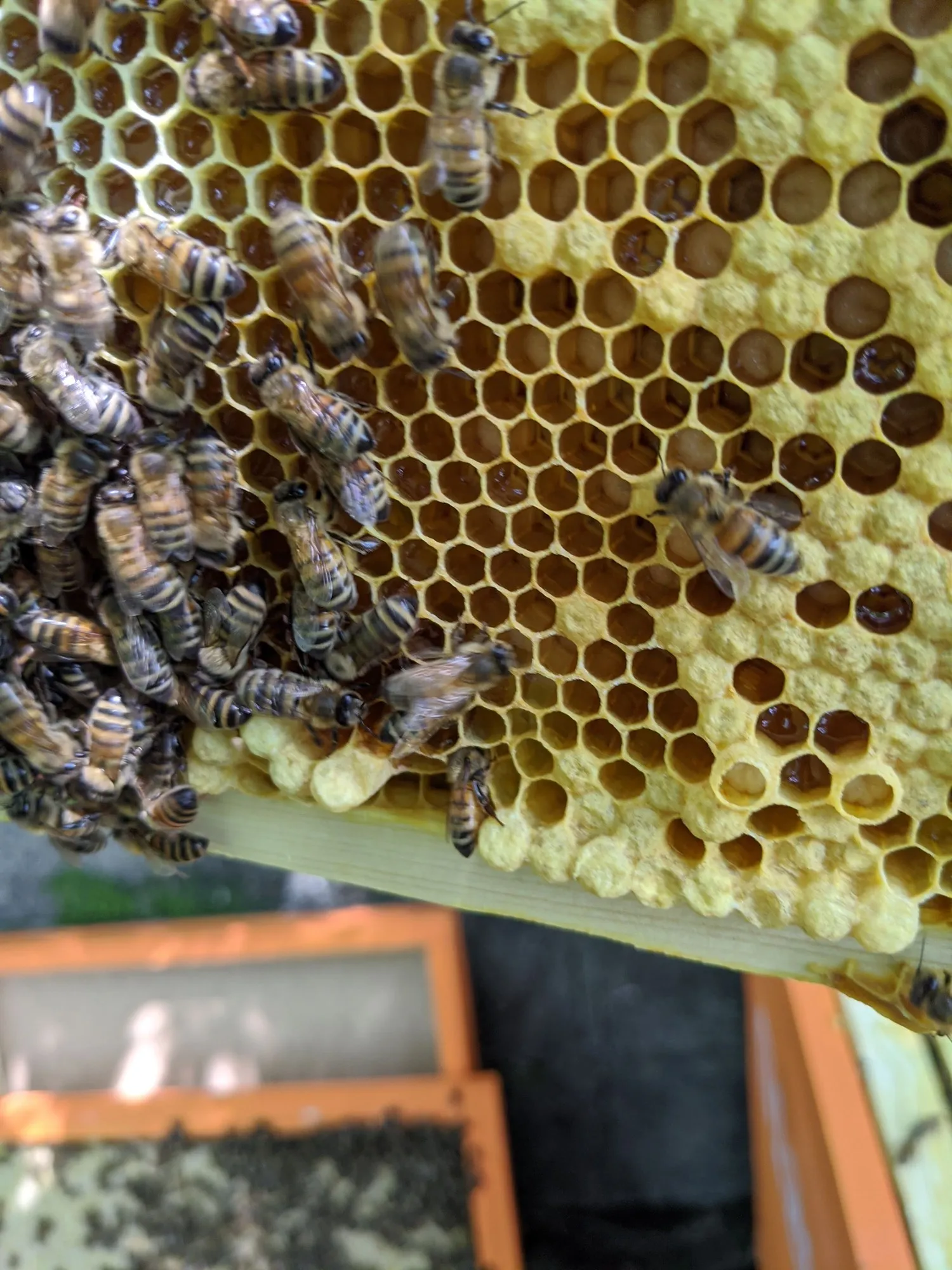
Apis mellifera carnica — the Carniolan honey bee — is native to Slovenia and protected there by law; it is the only bee Slovenian beekeepers are permitted to keep. It is the only bee we keep either.
Carniolans winter on remarkably small stores, explode in population when the spring flow arrives, and are gentle enough to work without a fight. They read a season honestly: they build when there is forage and stop when there is not, which makes them well suited to an Illinois year that cannot decide what it is doing.
A country that takes bees seriously
Slovenia has roughly eight thousand beekeepers — about four for every thousand people, among the highest density anywhere. Their national association was founded in 1873, and its magazine, Slovenski čebelar, has been published since 1898.
The tradition runs deeper than the numbers. In 1770 the Empress Maria Theresa appointed a Slovene, Anton Janša, as the first imperial teacher of beekeeping in Vienna. He worked out that a queen mates with drones in flight — not an obvious thing to establish in the 1770s — and wrote two manuals that shaped European practice. Five years later the Empress issued a patent establishing beekeeping schools across the empire.
Janša was born on 20 May 1734. In 2017 the United Nations adopted Slovenia's proposal to make that date World Bee Day. It is a small country's most successful export after the bee itself.
How it got to Illinois
Between roughly 1870 and 1924, industrial America pulled people out of the Slovene lands in numbers that emptied villages. The 1910 United States census counted 183,431 people of Slovene mother tongue; by 1920 it counted 208,552. They went where the work was — the mills, the mines, and the factory towns of the Midwest. Joliet had a Slovene settlement by 1873, and La Salle is named alongside it among the notable ones in this state.
Our family came in that wave. Our grandparents were both born in America, our grandmother in 1911, which puts her parents' crossing in the thick of it. We lived in LaSalle County before this — one of the places Slovenes settled to work the mines, and enough of them stayed to leave the surnames behind. We have been in Kane County since 2003.
So the Slovenian part of this business is not an import and it is not a theme. It arrived before the First World War and it never left. It is, by a wide margin, the oldest American thing about us.
Keeping it going here
Culture does not survive on sentiment. It survives on people turning up and doing things — cooking the food, speaking the words, keeping the craft.
We are members of the Slovenian Union of America, founded in 1926 as the Slovenian Women's Union and headquartered in Joliet, about an hour from our yards. It publishes Zarja, keeps a heritage museum and a library of over a thousand books, and runs the language, history and cookery groups that stop a diaspora culture thinning into a surname and a recipe nobody makes any more.
This honey belongs to that effort. Choosing the Slovenian bee, keeping it the way it is kept there, and selling the result under a Slovenian name is a small argument that the tradition is still working — not preserved behind glass, but in a field in Illinois, making honey.
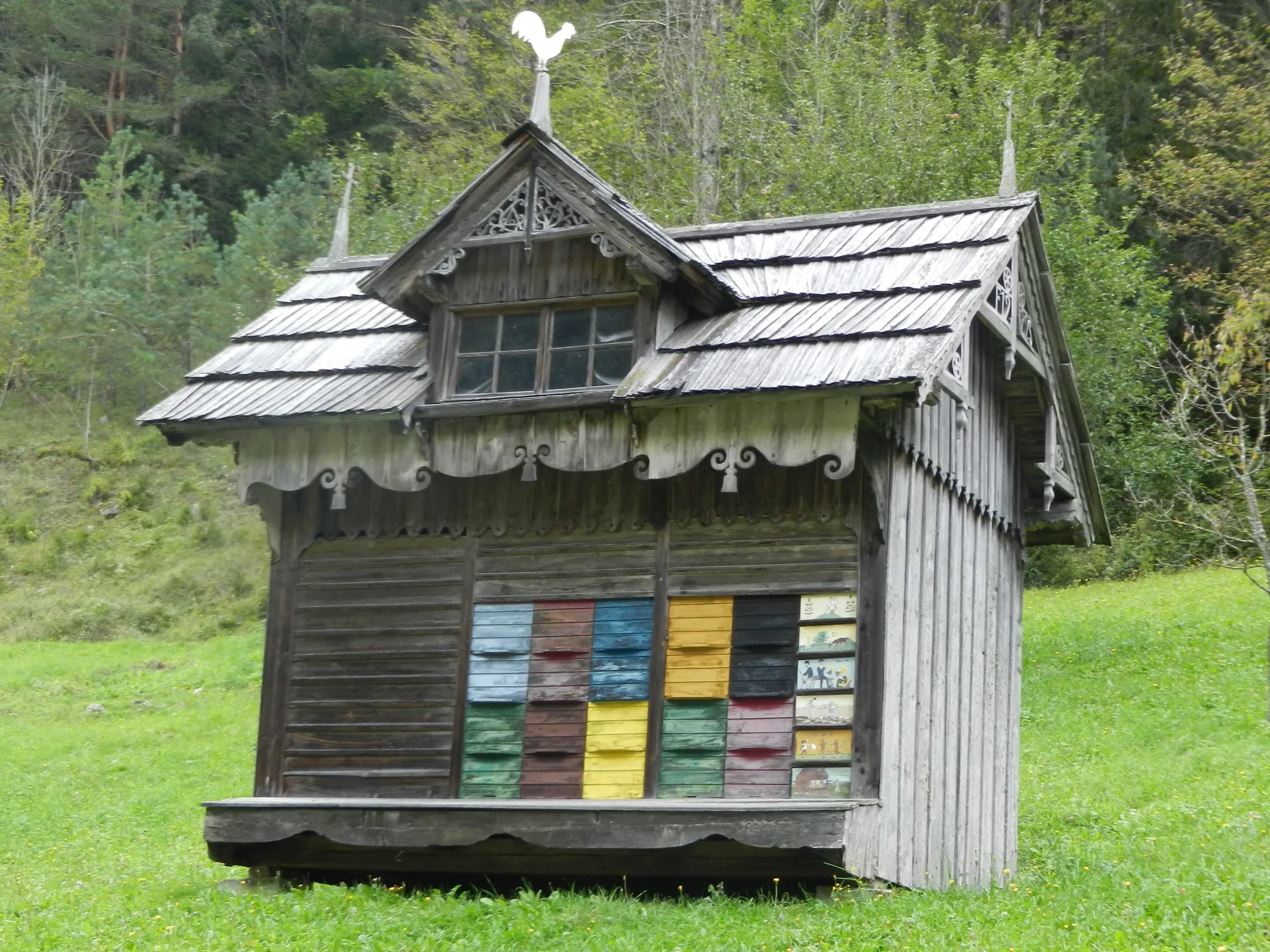
The AŽ hive
Most American beekeepers work Langstroth equipment: boxes opened from the top, frames lifted out vertically. Slovenia went a different way. In 1903 Anton Žnideršič designed a hive worked from the back, like a filing cabinet, on a standard frame of 41 × 26 cm. The AŽ hive suited the bee house perfectly — you stand inside, out of the weather, and open one colony at a time. By 1960 it had replaced the older stacked kranjič hives almost entirely, and it is still what most Slovenian beekeepers use.
Painted hive fronts
Slovenian bee houses are buildings, not scattered boxes, and their hive fronts were traditionally painted with panjske končnice — small narrative folk panels, so a beekeeper could tell one colony from another at a glance, and so the bee house was worth looking at.
What began as a practical mark became a folk art. The panels appeared in the late 1700s, spread through the 1800s, and faded early in the last century. More than 600 distinct motifs have been catalogued across some 50,000 surviving boards — saints and devils, hunting scenes, and a great deal of village humour at the expense of husbands, tailors and the local priest.
Our family's are still standing in Slovenia. The colours on this site — the deep blue and the gold — come from that tradition rather than from a stock palette.
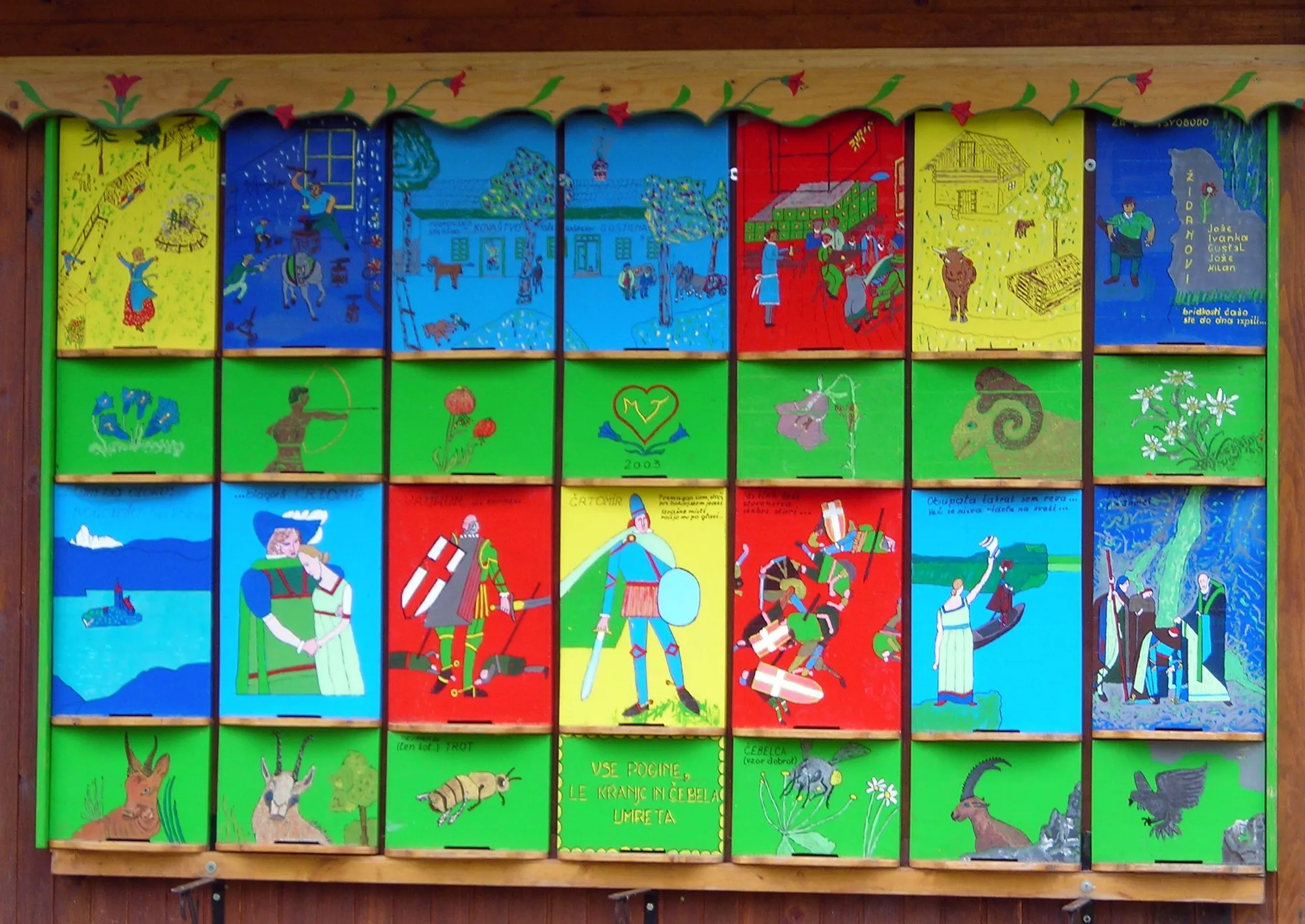
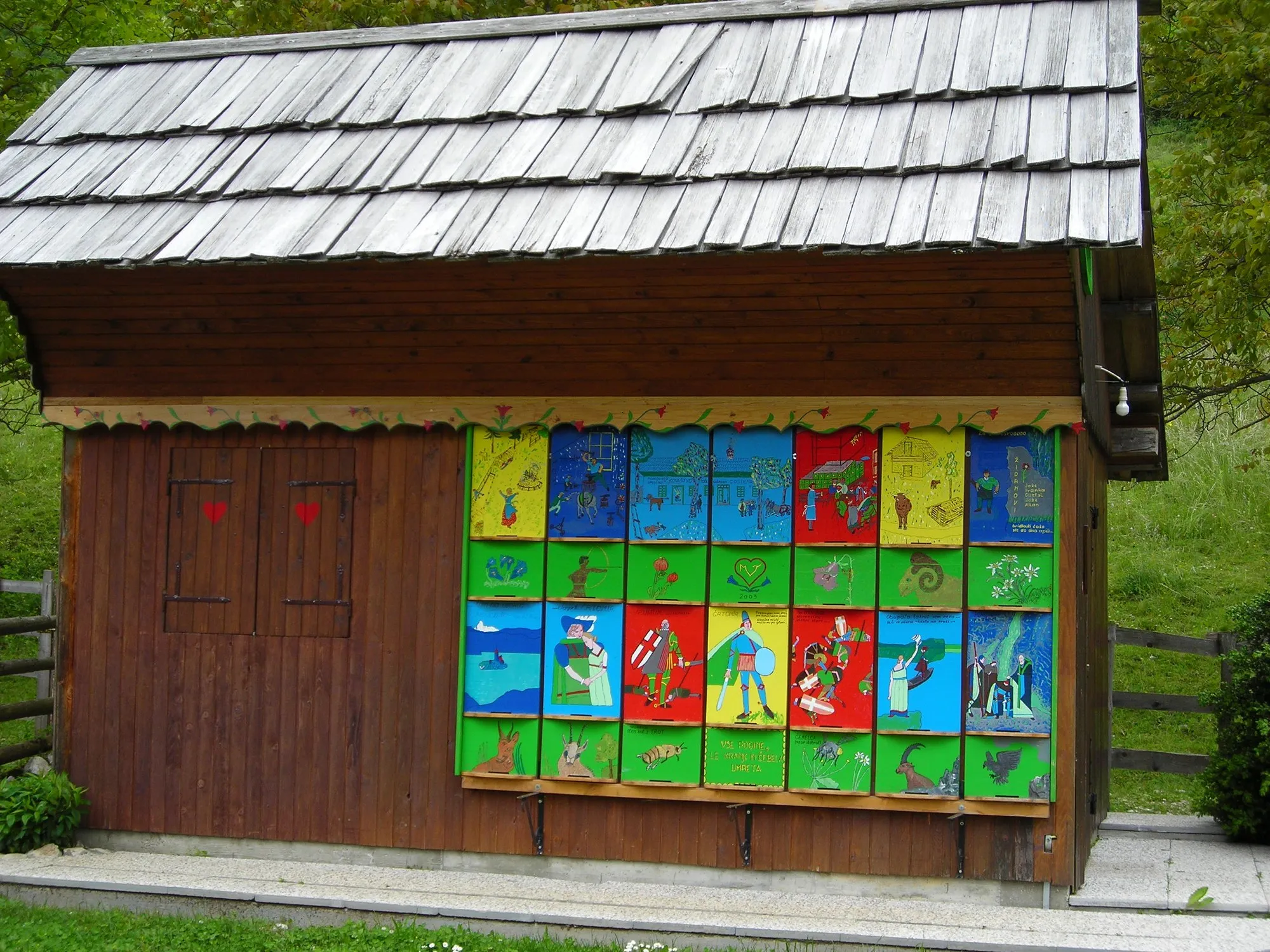
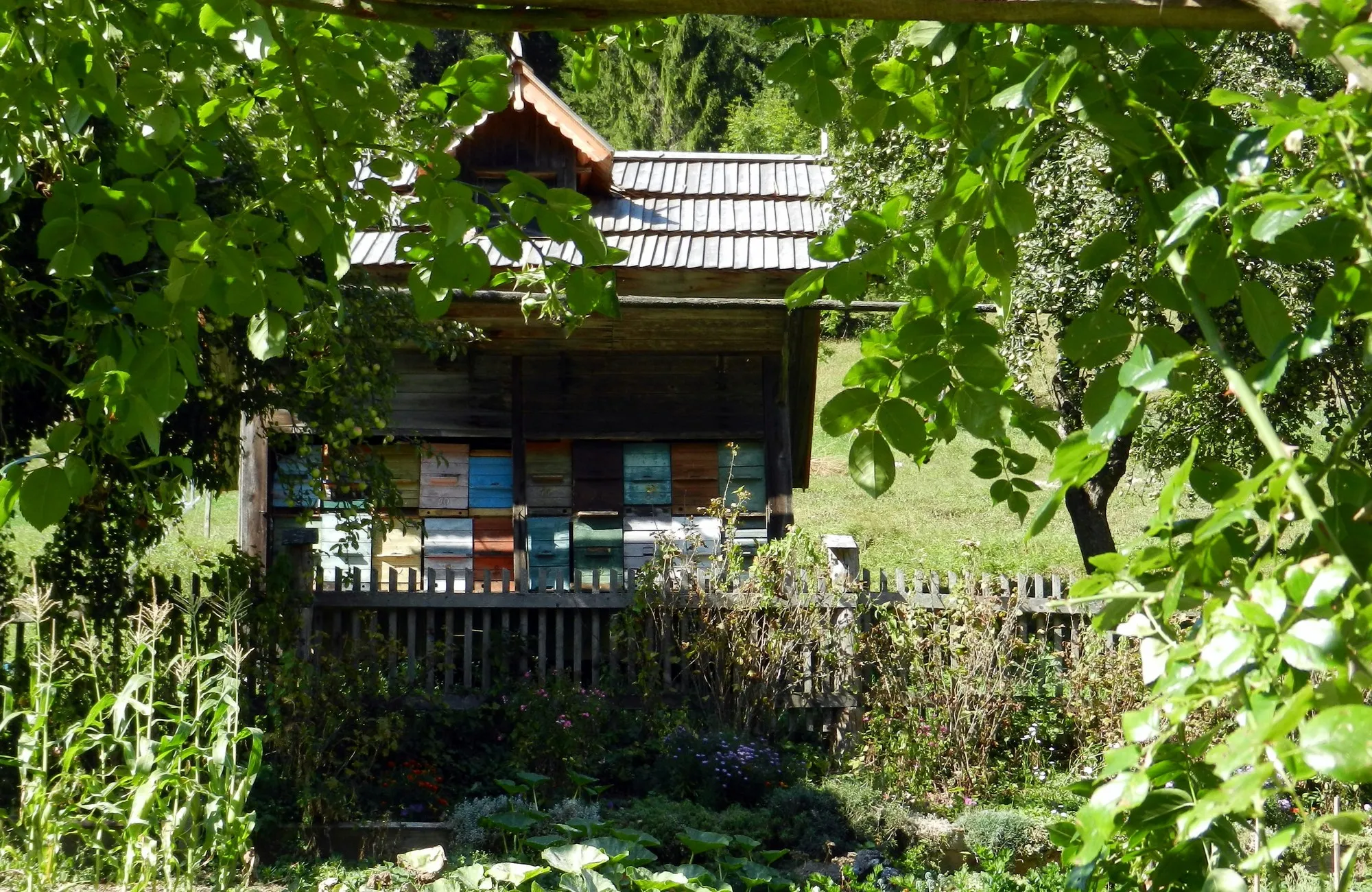
All three photographed in Slovenia.
Our apiaries
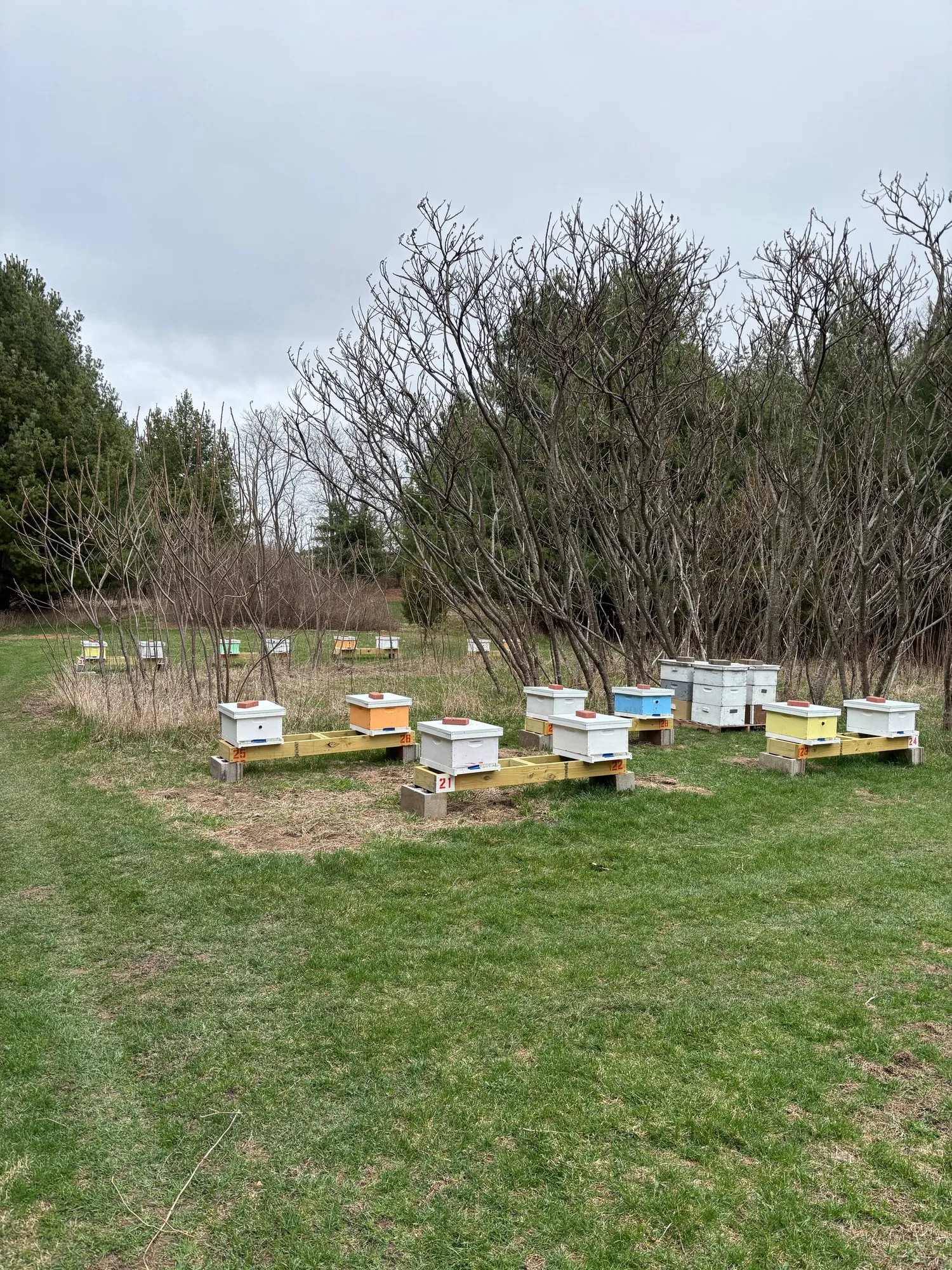
Our apiaries are spread across Kane County, which puts the bees on different forage as the season moves — better for the colonies, and better for the honey. Prairie and roadside bloom in one yard, orchard and clover in another, black locust along a fenceline in the last week of May.
Every yard is worked by hand. That is why we can tell you which yard a jar came from, and why no two seasons taste quite the same.
Work with us
We supply grocers, bakeries, kitchens, and shops across Chicagoland.
Sources
Historical dates, figures and details of Slovenian practice come from the Slovenian Beekeepers' Association (Čebelarska zveza Slovenije). World Bee Day was proclaimed by UN General Assembly resolution in December 2017. More about the Slovenian Union of America and its heritage museum in Joliet. Census counts of Slovene mother tongue, the 1870–1924 migration period, and the Illinois settlements at Joliet and La Salle are from “Slovenian Settlements in the USA since 1870s till Present”. Dates and details of our own family come from the family.